
Innovation for Learning Fund Grantee Spotlight: Dr. Vero Benavides on Building Early Biliteracy
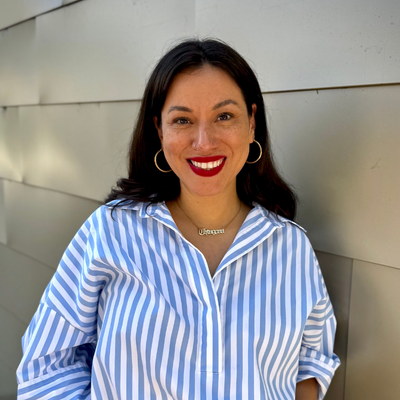
Dr. Veronica "Vero" Benavides grew up with all the ingredients for bilingualism. Her parents spoke Spanish, and for her grandparents, it was their only language. Vero’s parents faced criticism for speaking Spanish and were told by their children’s teachers that raising children with two languages would confuse them. As a result, they encouraged Vero and her siblings to speak English. It wasn't until years later that Vero felt the full weight of that language loss in the conversations she couldn't hold with her grandmother.
As an adult, she intentionally reclaimed her heritage language and built a career in culturally and linguistically responsive education as a teacher, researcher, and systems leader. But when her son was born, a new reality surfaced. At home, she narrated every part of his day in Spanish. But outside her home immersion, she fell completely silent.
"I realized that I was afraid," she remembers, recalling her hesitation over public judgment or grammatical errors in Spanish. Realizing she stood at a crossroads — between passing down generational hesitation and choosing "liberation, reclamation, and joy" — she chose joy and founded Bilingual Generation nearly five years ago.
Powering Innovation through the IFL Grant
Today, as an inaugural grantee of Education Leaders of Color’s (EdLoC) Innovation for Learning Fund (IFL), Dr. Vero is scaling that mission. Designed to directly invest in the bold ideas of leaders of color, the IFL provides $100,000 grants to educators transforming curriculum and instruction across the country.
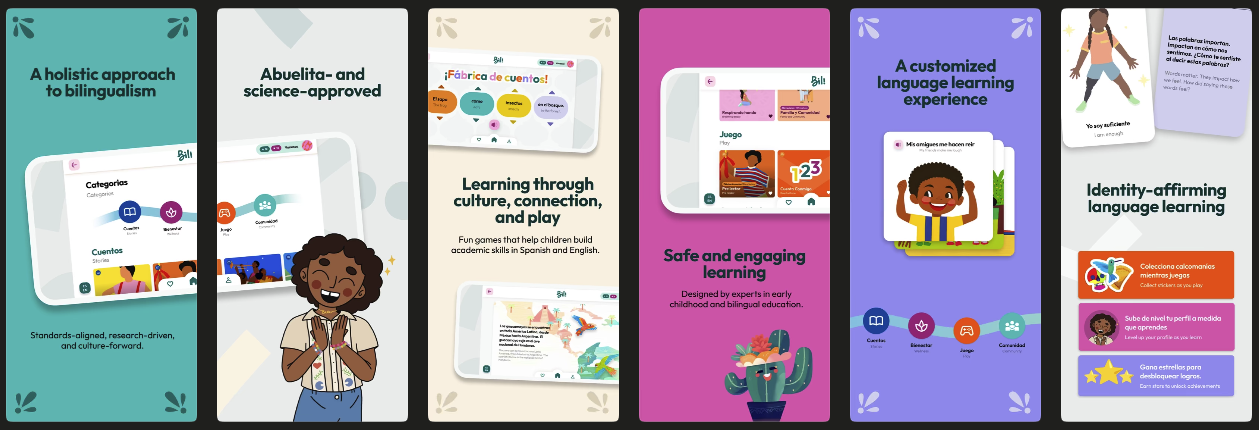
For Dr. Vero, joining the IFL cohort provides crucial support for expanding the Bili Biliteracy Initiative, a project centered on a bilingual learning app for children in pre-K through second grade. Developed alongside families and educators, Bili is affectionately described by her team as "Abuelita and science approved." Abuelita approves of honoring home languages and cultures, while research confirms that strong early native-language literacy accelerates second-language learning.
"We know how to raise bilingual kids. We have the research and the tools," Dr. Vero explains. "But the history of linguistic oppression in the U.S. is so deep that tools and strategies alone aren't enough."
Inside the Bili Biliteracy Initiative
Bili utilizes a true dual-language framework structured around four core hubs: cuentos (stories), juego (play), comunidad (community), and bienestar (wellness). Every story is written and narrated in authentic Spanish by authors from across Latin America, giving children exposure to diverse regional voices, local idioms, and Indigenous languages such as Quechua and Aymara.
By partnering directly with first-time storytellers, Bili opens doors that traditional publishing often keeps closed to Black and Brown creators, utilizing an intentional "slow tech" design that prioritizes human connection over screen time.
As Bilingual Generation tested Bili in schools, they discovered that even the best digital tool requires strong human wrap-around support. Through the Innovation for Learning Fund, EdLoC’s $100,000 investment allows the team to pair Bili directly with their professional learning programs, expand bilingual content, strengthen family engagement, and create an evidence-based implementation model for districts.
This support arrives at a critical moment. Amid shifting policy landscapes and federal funding uncertainties, some families have pulled children from dual-language programs out of fear. Yet the demand from parents and districts to preserve heritage languages remains unwavering.
"We're in a moment of great turmoil and pain right now," Vero says, "but also great hopefulness."
Scaling Impact with the EdLoC Cohort
Dr. Vero joined Education Leaders of Color early in her founder journey after peers recommended it as a space for collaboration and shared purpose. Those relationships sustained her through the challenges of early-stage organization development. After learning about the Innovation for Learning Fund at an EdLoC convening in Los Angeles, applying felt like a natural extension of her work.
Through the IFL cohort and EdLoC’s advisor network, Dr. Vero is evaluating the best distribution pathways—whether through district partnerships, direct-to-teacher access, or family-facing channels—to bring Bili to more communities.
"The need is great," she says, "and the possibilities are endless." Ultimately, she envisions a future where multilingual children never have to choose between their home language and their academic success. "I want a future where kids don't have to be afraid of the language that they speak," she says, "and where they don't have to feel like they have to let go of parts of who they are to be successful in school."