
BY: JIN-SOO HUH, SENIOR DIRECTOR OF PARTNERSHIP & INNOVATION, EDUCATION LEADERS OF COLOR
Some of the most promising ideas in education are not starting in conference rooms or emerging from top-down mandates. They are taking shape in classrooms, schools, and communities, led by people who understand both the challenges students face and the possibilities that exist when we rethink how learning happens. That belief is at the heart of EdLoC’s Innovation for Learning Fund.
When we launched the fund, we set out to identify and invest in leaders of color developing new and emerging approaches to strengthen curriculum, instruction, and student learning. We knew innovative ideas existed across our network. The response reinforced just how much creativity, expertise, and commitment leaders are bringing to this work.
We received 157 applications representing a wide range of ideas, from new uses of artificial intelligence to innovative approaches to literacy, multilingual learning, educator development, civic education and college readiness.
Behind every application was a leader asking an important question: How can we create better learning experiences and stronger opportunities for students?
The range and quality of the ideas made the selection process both inspiring and challenging. Thirty-two EdLoC members served as application reviewers, and six members participated on the final selection committee. Their experience and insight helped identify 13 finalists and, ultimately, seven inaugural grantees.
Today, we are proud to invest $100,000 per grantee to help these leaders move their ideas forward.
Meet the Inaugural Grantees
The seven selected projects reflect the many ways innovation can strengthen teaching and learning across the K–12 journey.

Jasmine Ako of GPSN is partnering with Los Angeles Unified School District and Yu Ming Charter School to strengthen dual-language education in Los Angeles. By combining the expertise of a nonprofit, a large public school district, and a high-performing dual-language charter school, the initiative will provide educators with professional learning, coaching, and data-driven tools to improve instruction in both English and partner languages, helping more students achieve biliteracy.

Chidi Asoluka of NewComm is challenging traditional definitions of literacy. His approach helps students apply the critical-thinking skills used to analyze literature to understanding capital, communities, and narratives. Students then put their learning into action through projects that address real needs in their communities.
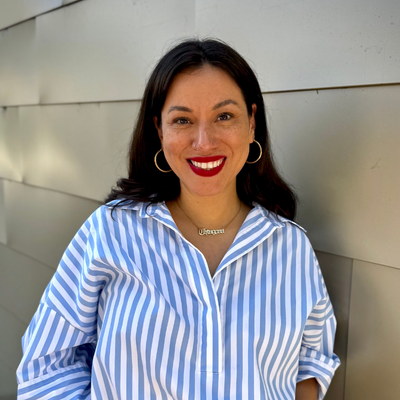
Dr. Veronica “Vero” Benavides of Bilingual Generation is advancing the Bili Biliteracy Initiative, which supports young multilingual learners through culturally sustaining bilingual resources and stronger connections among educators, families and communities. The initiative recognizes children’s home languages and cultures as strengths that can deepen literacy, learning and belonging.

Pagee Cheung of College Persistence Coalition is addressing a barrier that can shape whether students remain in college: gateway mathematics. Her model brings high school educators and college faculty together to strengthen instruction and help more students complete a college-level math requirement before graduating from high school.

Vichi Jagannathan of Rural Opportunity Institute is bringing civic education to life for high school students in rural North Carolina. By connecting a standards-aligned civic curriculum with paid experiences inside local government agencies and public institutions, the initiative helps young people better understand how decisions are made and the role they can play in shaping their communities.

Nick Okafor of trubel&co is expanding CivicScape, an AI-supported platform that helps teachers transform local climate and civic data into classroom learning experiences. Students can use information about their own neighborhoods, from environmental conditions to housing and civic history, to build data literacy, critical-thinking and civic reasoning skills.

Dr. Jacquelyn Ollison of the Center for Research on Expanding Educational Opportunity is strengthening and scaling the California Black Studies Curriculum. Her work places educators at the center of refining and implementing culturally relevant curriculum, creating opportunities for more students to see Black histories, experiences, and contributions reflected across their learning.
These projects are different by design. They serve students at different stages, address different challenges, and use different approaches. What connects them is a commitment to building stronger learning experiences around the strengths, needs and aspirations of students and communities.
Creating Room for Ideas to Grow
Innovation doesn't always begin with a breakthrough; it often begins with a leader who sees a familiar challenge through a different lens. Across the country, leaders of color are developing bold, community-rooted solutions that strengthen teaching and learning. By investing in their leadership and ideas, EdLoC is helping accelerate innovations that can improve outcomes for students today and shape the future of education.
Leaders need resources to test new approaches, learn from implementation, gather evidence, strengthen their models, and determine what it will take to expand their impact. The Innovation for Learning Fund is designed to provide that opportunity.
This investment is also closely connected to EdLoC’s mission. We believe leaders of color bring essential knowledge, lived experience, and expertise to the work of improving education. By investing directly in their leadership and ideas, we are helping build collective power while expanding opportunities for young people.
The inaugural grantees remind us that innovation is already happening across the country. It is happening when multilingual children see their languages and cultures reflected in what they read. It is happening when students use data from their own neighborhoods to better understand their communities. It is happening when young people experience civic learning by participating in local government and when educators across K–12 and higher education work together to remove barriers before students encounter them.
Our role is to recognize these ideas, invest in the people leading them, and create opportunities for their work to move forward.
The Innovation for Learning Fund is one step in that commitment, and there is more to come. Later this year, EdLoC will launch its next Boulder Fund funding opportunity, creating another pathway to support leaders of color working to expand opportunity and drive meaningful change.
We are proud to celebrate these seven leaders, the ideas they are bringing forward, and the students, educators, and communities their work has the potential to reach.